
UAE e-Invoicing Penalties Explained: Avoid Common Compliance Mistakes
May 6, 2026

UAE e-invoicing penalties apply when a business fails to implement the system by the required deadline, does not issue and send an electronic invoice or electronic credit note within the required period, or fails to make a required notification after a system failure. For freelancers and small businesses, the safest step is to tighten up invoice admin before the rollout reaches you.
Freelancers and small business owners often feel the pressure first in their daily admin. A late invoice, missing detail, weak correction record, or poor filing process can turn into a problem when the e-invoicing rules start applying to your business.
The UAE is bringing in e-invoicing in phases. The pilot and voluntary stage starts on 1 July 2026. Mandatory rollout then begins in stages from January 2027 onwards.
This guide is based on official UAE Ministry of Finance legislation, implementation decisions, and e-invoicing guidance.
UAE e-invoicing penalties can apply for late implementation, late invoice or credit note transmission, and missed required notifications.
Freelancers can run into problems through everyday admin gaps such as late invoices, missing details, weak correction records, and poor filing.
Preparing early gives you more time to organise invoice data, fix recordkeeping issues, and tighten up your process before your start date.
A structured platform like Freelance Central can help you manage invoices, client records, and payment tracking in one place.
What Is UAE e-Invoicing?
UAE e-invoicing is a Ministry of Finance framework for issuing, sending, receiving, exchanging, and storing invoice data in a structured electronic format. It covers electronic invoices and electronic credit notes and forms part of the UAE’s wider move towards more standardised digital business processes.
The framework applies to persons conducting business in the UAE for business-to-business and business-to-government transactions, subject to the exclusions set by the Ministry.
For freelancers, there is more to manage than sending an invoice and waiting to be paid. Timing, invoice data, corrections, and record storage all need closer attention.
What the Penalties Cover
Administrative penalties apply to specific failures under the Electronic Invoicing System.
These include:
Failing to implement the system on time.
Failing to issue and send electronic invoices on time.
Failing to issue and send electronic credit notes on time.
Delaying required notifications to the authority or the accredited service provider.
The Ministry also states that an electronic invoice must be in a structured electronic format that supports automatic processing.
Common Mistakes That Can Lead to Problems
Sending invoices late
The rules say the issuer must issue and send the electronic invoice or electronic credit note within the required timeline. In many cases, that is within 14 days from the date of the business transaction, subject to the rule for registrants in the same article.
Late invoicing can also lead to follow-on problems, such as:
Delayed payment.
Harder-to-track records.
Extra admin later.
More pressure if a correction is needed.
Using the wrong correction method
Invoice issues should not be fixed by editing a file and sending it again. The rules say an electronic credit note is required in cases such as:
Cancellation
Reduced consideration
Returned consideration
Administrative error
Numerical error
If the wrong correction method is used, the invoice trail becomes harder to follow.
Missing required invoice details
Electronic invoices and electronic credit notes must include the data fields set by the Ministry of Finance.
If information is missing or incomplete, the invoice becomes harder to:
Process
Track
Support later checks
Reconcile with the correct transaction
It can also slow payment and add more admin at the end of the job.
Weak recordkeeping
The framework requires invoice and credit note data to be stored under the applicable rules. Records need to be easy to find and tied to the right transaction.
Leaving system setup too late
The UAE is not introducing e-invoicing for everyone on one date. Different businesses will come in at different stages of the rollout.
If setup is left too late, there is more pressure to:
Choose a provider
Sort out invoice data
Fix gaps in records
Prepare internal processes in less time
Why Freelancers Should Prepare Early
Freelancers often manage client work, invoices, records, and payment follow-up on their own.
That leaves more room for simple admin slips, such as:
A missing client detail.
A duplicate invoice number.
An untracked correction.
A payment update stored in the wrong place.
Each one may look small at first. Later, they can be much harder to sort out.
The UAE framework depends on structured data, traceable records, and timely transmission. That is a strong reason to get your invoice process in order before rollout reaches your category.
How to Reduce E-Invoicing Risk
Start by reviewing your invoice process from start to finish.
Check:
How invoices are created.
Where client details are stored.
How corrections are handled.
How payments are tracked.
Whether records sit in one place or across several tools.
A stronger process should include:
Up-to-date client details.
Invoice records stored in one place.
One method for corrections.
A review of your setup before your phase begins.
How Dynamic Freelancer Supports a Better Invoicing Workflow
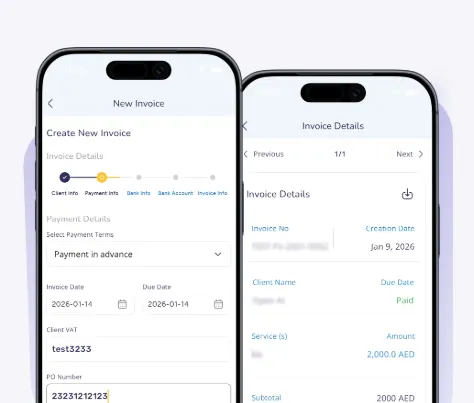
We support freelancers with a more organised way to handle invoicing through Freelance Central. The platform brings invoices, client records, and account activity into one place, so you have a better view of what has been raised, what is still pending, and what needs follow-up.
With Freelance Central, you can manage clients, raise invoices, track invoice status, and monitor payment activity. That helps cut down on manual admin and keeps invoice activity linked to the right client record.
Worth a look: The Full Guide to the Freelance Central App
Manage Invoicing with Dynamic Freelancer
UAE e-invoicing is moving from policy into practice, and small invoicing gaps can become bigger problems once the rules start applying to your business. Late invoices, missing details, weak correction records, and poor filing habits can all create avoidable pressure.
The strongest way to prepare is to sort out your invoicing process before your start date arrives. Keep your records in order, use the right correction method, and make sure invoices, client details, and payment activity are easy to track.
If you want a more organised way to manage invoicing day to day, Freelance Central helps bring your invoices, client records, and payment activity into one place, so you can stay on top of admin more easily.
Frequently Asked Questions
Find answers to common questions about this topic
What is the penalty for not issuing an electronic invoice in the UAE?
How can freelancers ensure compliance with UAE e-invoicing regulations?
Why is documentation important in invoicing compliance?
Can manual invoicing lead to compliance issues?
What role do accredited service providers play in e-invoicing?
Disclaimer: This article is intended to provide practical, up-to-date information. Details may vary based on individual circumstances, location, or changes in regulations. The information provided is for informational and educational purposes only.