
To work legally as an influencer in the UAE, you need to look at two things: the approval required for promotional content and the legal setup required for paid brand work, contracts, and invoicing.
That applies across influencer work such as paid campaigns, gifted collaborations, affiliate promotions, PR stays, and long-term brand partnerships.
The exact route depends on your situation, including your visa status, whether you are based in the UAE or visiting, and how your content is being used.
Influencer Work in the UAE
According to the UAE Media Council, the permit covers advertising and media content published through social media accounts, websites, and other digital platforms, whether the content is promotional in nature.
Influencer work includes:
Paid promotions
Gifted collaborations
PR stays
Affiliate links
Discount codes
Sponsored videos
Branded blog content
Campaign work published through your own channels
If a product, service, or stay is given in exchange for coverage, it still falls within promotional content. In our advertiser permit guide, we explain that paid and unpaid promotions sit in the same compliance category.
Legal Requirements for Influencers in the UAE
The legal side of influencer work in the UAE has two parts: the approval linked to promotional content, and the commercial setup linked to contracts, paid brand work, and invoicing.
The UAE Media Council states that the permit applies to advertising and media content published through digital platforms. The official service page also lists Digital ID, passport, personal photo, and a commercial license as requirements.
If you are publishing promotions and invoicing brands, you need both the advertising approval and the right commercial setup.
Do Influencers Need an E-trader Licence?
Yes, influencers in Dubai need an E-trader licence before applying for the Media Council’s Advertiser Permit. The E-trader licence establishes the legal commercial setup for paid work and invoicing. The Advertiser Permit then covers the promotional content published through social media and other digital platforms. This is why the process starts with the licence and then moves to the permit.
When the Advertiser Permit Applies
The advertiser permit applies when you publish promotional content through social media accounts, websites, or other digital platforms in the UAE.
The UAE Media Council states that this includes promotional content published through digital platforms.
That includes:
A paid fashion campaign
A complimentary hotel stay in exchange for coverage
A brand mention in a YouTube video
An affiliate link in a story or blog
A post linked to a discount code
A sponsored mention published from inside the UAE
Which Route Applies to Your Visa Status?
Your visa status changes the approval and setup you need to review.
UAE residents
If you are living in the UAE and publishing promotional content from inside the country, the standard individual permit route is the starting point.
The official service page lists:
Digital ID
Passport
Personal photo
Commercial license
The same page also lists conditions such as good conduct, completion of the training programme, no previously cancelled permits, and no outstanding financial obligations to the authority.
Visitors
If you are visiting the UAE, the route is different.
The UAE Media Council has a separate permit for visiting individuals who want to publish advertising content while in the UAE. The official visitor service states that the application must go through a licensed advertising agency in the UAE. It also states that the permit runs for three months and can be extended, with a maximum total period of six months.
Dependants and other UAE-based creators
If you already live in the UAE under another person’s sponsorship, you still need to review the route for paid promotional work and invoicing. In our advertiser permit guide, we include dependants as part of the wider compliance picture for monetised content.
What You Need to Manage Brand Work
Brand work involves more than posting content.
Contracts
Before a campaign starts, you should know:
What you are delivering
How long the campaign runs
What usage rights the brand receives
When payment is due
Whether revisions are included
A proper agreement protects both sides. It also makes brand relationships smoother from the start.
Invoicing
Once your creator work moves into regular paid campaigns, invoicing becomes part of the setup. Brands and agencies expect a professional process. The commercial license requirement on the official permit page reinforces that influencer work links back to formal commercial activity, not just posting online.
Campaign records
Keep records of:
Signed agreements
Approval emails
Deliverables
Invoices
Payment records
The accounts used for promotional posts
This protects you during onboarding, payment follow-up, and campaign disputes.
Which Accounts Should Be Used for Promotional Content?
In our advertiser permit guide, we advise creators to keep proof of approval, display the permit number on the relevant accounts, and publish ads only through the accounts registered for promotional work.
Regulated Sectors Need Extra Care
Some industries come with tighter controls.
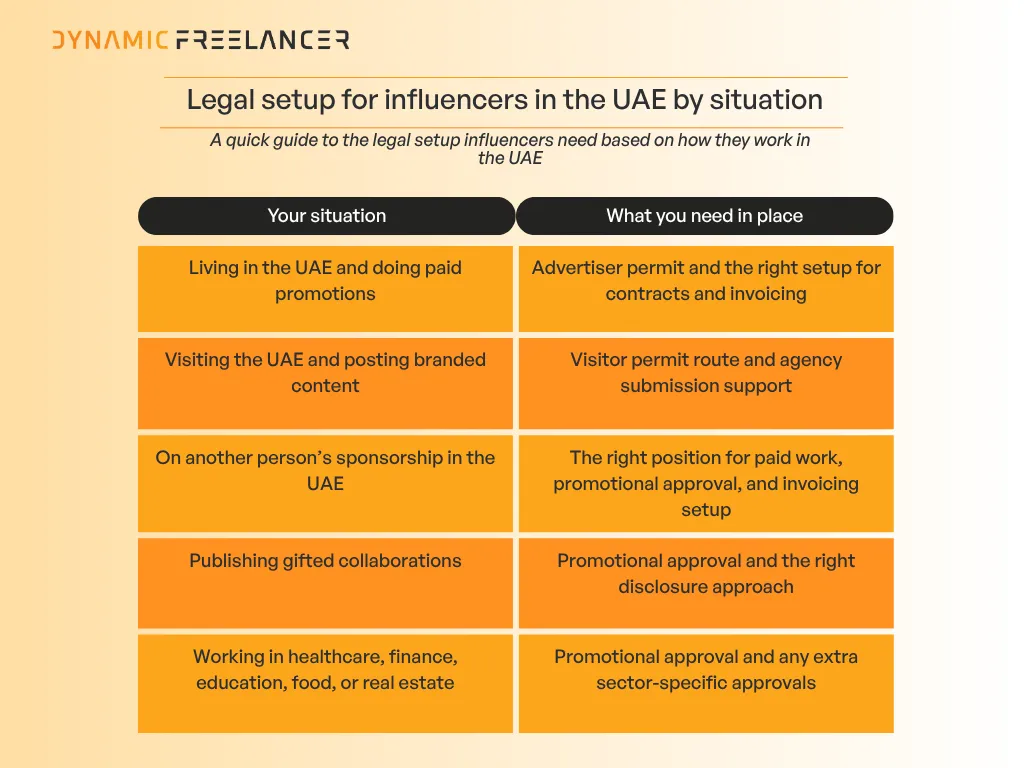
In our advertiser permit guide, we flag healthcare, finance, education, food, and real estate as sectors that can require extra approvals before content goes live.
This is where you need to slow down and review campaign wording carefully.
Examples:
Healthcare content should avoid unsupported treatment claims
Finance content should avoid guarantee-style language
Real estate promotions need careful handling around project and property claims
Education content should avoid misleading outcome statements
Food campaigns need caution around health and nutritional claims
If a campaign falls into a regulated sector, check the approval path before anything is published.
Common Mistakes to Avoid
Treating gifts as non-commercial
Products, PR packages, and complimentary stays can still fall under promotional content when they are exchanged for coverage.
Assuming overseas brands sit outside UAE rules
If the content is published from inside the UAE, local rules still apply.
Confusing the permit with the full setup
The advertiser permit covers advertising activity. It does not solve the wider commercial side of creator work on its own. The official service requirement for a commercial license shows that promotional approval and commercial setup work side by side.
Starting brand work before checking the route
This creates avoidable problems with approvals, brand onboarding, and payment processes.
What to Focus on Based on Your Situation
If you are living in the UAE, start by checking the permit route and the commercial setup needed for paid brand work.
If you are visiting the UAE, review the visitor permit route and whether an agency must apply on your behalf.
If you are under another person’s sponsorship, check what route applies to promotional work, invoicing, and account use before starting campaigns.
Final Thoughts
If you want to work with brands in the UAE, start by checking whether your content falls within promotional activity, what permit route applies to your situation, and what legal setup you need for contracts and invoicing. That gives you a stronger starting point before any campaign goes live.
Frequently Asked Questions
Find answers to common questions about this topic
What counts as influencer work in the UAE?
Do I need a special permit to work as an influencer in the UAE?
How does my visa status affect my work as an influencer in the UAE?
What invoicing practices should I follow as an influencer in the UAE?
Are there additional requirements for influencers in regulated sectors?
Disclaimer: This article is intended to provide practical, up-to-date information. Details may vary based on individual circumstances, location, or changes in regulations. The information provided is for informational and educational purposes only.