
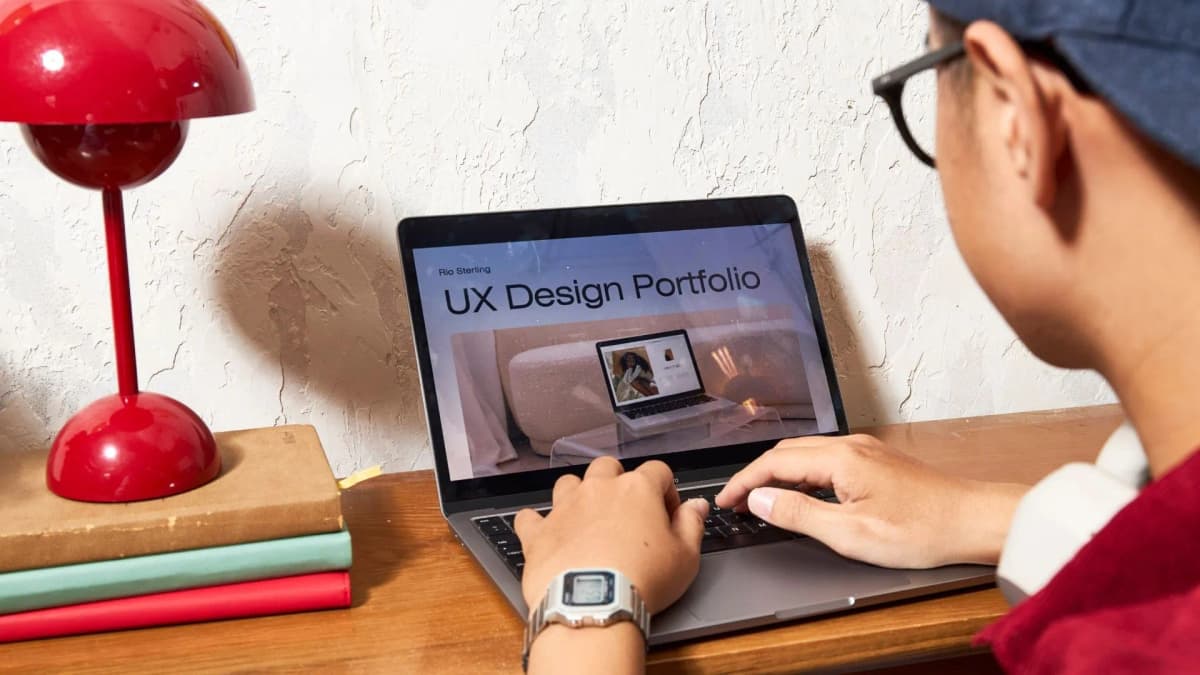
If a client looked at your portfolio for 30 seconds, would they hire you?
Clients do not have time to study your full background. They scan your portfolio and decide quickly if you feel reliable, clear, and worth contacting.
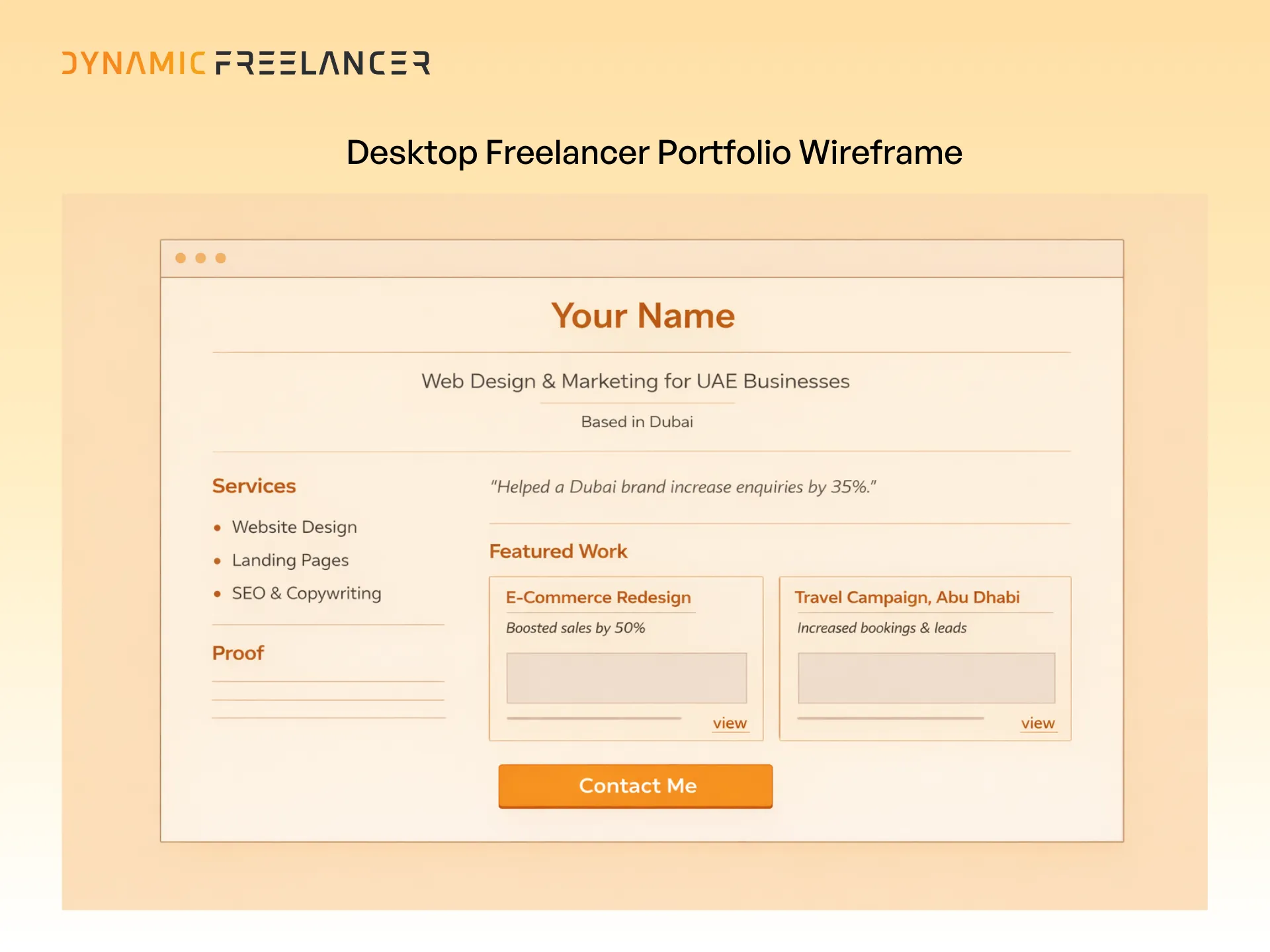
A strong freelancer portfolio clients trust is simple: clear services, strong proof, and a clear way to contact you. Show what you do, who you help, and 3 to 6 examples with results and testimonials.
This guide breaks down what UAE clients want to see, what to include if you are new, and how to use your portfolio to get replies and win projects.
What UAE Clients Need to See First
Your portfolio must answer three questions on the first screen: What do you do? Can you deliver? And how do I contact you? If those answers are not clear, clients leave.
The 3 trust signals clients look for
1) A one-line offer
Say what you do and who you help.
Example: “Graphic designer for UAE hospitality brands.”
2) Strong proof
Show 3 to 6 samples that match the work you want. Add short notes on results. Include testimonials if you have them.
3) Contact action
Add one clear next step: WhatsApp, email, or “Book a call.”
What makes a portfolio feel UAE-ready
State your location or setup: Dubai, Abu Dhabi, UAE-wide, or remote.
Add your working hours and time zone.
Keep the layout simple with short sections and clear headings.
What to Include in a Freelancer Portfolio
Your portfolio must help a client understand your value fast. Keep it focused and easy to scan.
A clear headline and service offer
Write one sentence: what you do + who you help + UAE location or remote.
Example: “Freelance web designer for UAE startups.”
Add:
3 to 5 services
A contact option (WhatsApp or email)
3 to 6 strong samples with context
Pick only your best work. For each sample, add:
Project type
Goal
Your role
What you delivered
Proof of results
Turn your best 2 to 3 projects into short case studies:
Problem
Solution
Outcome
Use numbers when you can. If data is private, state the outcome without details.
Social proof
Add 1 to 3 strong testimonials with a name and role. If you do not have testimonials yet, use feedback from past work or platform reviews.
If You Are New, What to Show Instead
You can build a strong portfolio without paid clients. You need work that proves skill, clear thinking, and a finished result.
How to create portfolio pieces without paid clients
Use one of these options and present it like client work:
Spec projects: Pick a UAE business type you want to work with and create a full example. For example, a restaurant menu redesign, a real estate social media pack, or a landing page for a fitness studio.
Fix and improve: Take a weak website, profile, or ad and show a clear before and after with your changes and reasons.
Volunteer work: Do one project for a community group, startup, or event and document the outcome.
Past job work: If you have permission, include work from full-time roles or internships and explain your role.
For every piece, add 3 lines: goal, what you did, and what the result should achieve.
How many examples you need to look credible
Aim for 3 to 6 strong samples. If you are starting from zero, begin with 3 high-quality pieces. Add more only when they are better than what you already show.
Website vs PDF for UAE Clients
When a website is worth it
Use a website if you want to rank on Google, share one link everywhere, and keep your work updated. A website also looks stronger when you offer ongoing services.
When a PDF is better
Use a PDF if you need something fast, easy to send on WhatsApp, and focused on closing one project. A PDF works well for proposals, pitching, and shortlists.
The simplest setup
Use both: a one-page website as your home, plus a short PDF you can send in DMs. Keep the PDF to 3 to 6 pages with your best work, proof, and contact details.
UAE-Specific Details That Build Trust
Location, availability, and how you work
State where you are based and how you work in one line.
Example: “Based in Dubai, available for UAE clients, remote or on-site.”
Add your working hours, time zone, and your preferred contact method.
What to avoid sharing
Do not share personal ID documents, visa pages, or private addresses. Do not post confidential client data. Keep your portfolio focused on work, results, and how to contact you.
How to Use Your Portfolio to Get Clients in the UAE
What to send when a client asks for your portfolio
Send one message with:
One link to your portfolio
One line on what you do for their type of business
One best example that matches their request
One clear next step: “Do you want a quick call today or tomorrow?”
How to tailor your portfolio for one client in 10 minutes
Move your most relevant 2 to 3 samples to the top
Add a short line under each sample that matches their goal
Remove anything that does not relate to their project
Add one sentence at the top: “For your project, I recommend we focus on X.”
Next step: pitch yourself clearly
Once your portfolio is ready, you should also be ready to pitch clearly, because a strong pitch is what turns interest into a confirmed client.
Ready to Turn Your Portfolio Into Clients?
Your portfolio should help you position yourself as a premium freelancer through strong work, clear results, and a professional standard throughout. Keep your offer clear, show 3 to 6 strong samples, and add proof through results and testimonials. If you are new, create portfolio pieces that show your skill and how you solve problems. Choose a format that is easy to share, and make sure clients can contact you in one step. When your portfolio is clear and focused, it helps you get more replies and better clients.
Frequently Asked Questions
Find answers to common questions about this topic
Disclaimer: This article is intended to provide practical, up-to-date information. Details may vary based on individual circumstances, location, or changes in regulations. The information provided is for informational and educational purposes only.