

You can deliver great work and still feel overwhelmed when you have multiple clients. Your day gets chopped into small pieces, you jump between tasks, and deadlines start stacking up. Context switching and constant client follow-ups drain your focus and push important work into the late hours.
You can manage multiple clients without burnout by planning around your true weekly capacity, protecting deep-work time, and using a workflow that reduces context switching.
Keep reading to learn five practical tips to batch client work, set clear boundaries, keep clients updated, and control scope so your deadlines stay on track.
Tip 1: Plan Your Weekly Capacity Before You Accept Work
Know your available hours for client work
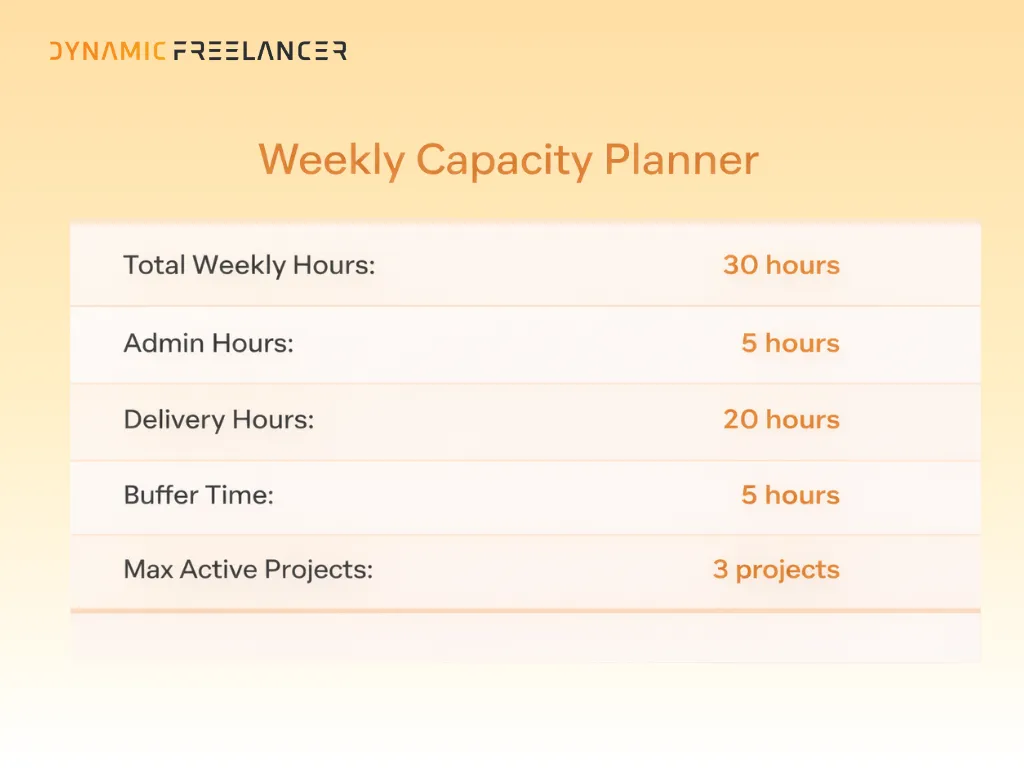
Your week includes more than delivery. Meetings, messages, admin, and personal time all take space. Start by setting your total working hours for the week, then subtract time for non-billable tasks like calls, proposals, invoicing, and revisions. The hours left are your delivery hours. This keeps your plan accurate and protects your deadlines.
Set a maximum number of active projects
Too many active projects creates constant switching and slower output. Set a clear cap for how many projects can be in progress at the same time. Everything else goes into a queue with a start date. This protects your focus, improves delivery quality, and helps you give clients firm timelines.
Add a buffer to protect your deadlines
Delays happen. Clients reply late, feedback changes, and urgent edits appear. Build a buffer into every week so your schedule can absorb interruptions without breaking. Keep part of your delivery time free for fixes and unexpected work. When you plan for delays, you stay on track and your clients get consistent delivery.
Tip 2: Time-Block Your Week to Stay on Track
Block focus time for client delivery
Book time blocks for tasks that need full attention, such as writing, design, editing, or building. Keep meetings and message replies outside these blocks. This helps you finish faster and deliver cleaner work.
Do a daily 10-minute reset
Plans change during the week. Start each morning with a 10-minute reset. Check deadlines, pick your top three tasks, and place them into time blocks. Move lower-priority tasks to later in the week. This keeps your day clear without constant re-planning.
Set office hours for calls and messages
Client messages can break your flow. Set fixed times to reply, such as late morning and late afternoon. Do the same for calls. When clients know when to expect a reply, you stay responsive while protecting your delivery time.
Tip 3: Batch Similar Tasks to Save Time
Batch your messages and admin
Set two short windows each day for client messages, follow-ups, and quick admin. Keep all replies inside those windows. This stops your day from getting broken up by constant notifications.
Batch invoicing and paperwork once or twice a week. Use the same time slot every week so it becomes routine and nothing builds up.
Batch reviews and revisions together
Reviews and revisions take focus because you need to re-enter the project and remember the details. Group them together in one block so you stay in the same mindset.
A simple rule: do delivery work first, then reviews, then revisions. This keeps projects moving forward and reduces last-minute rush.
Use a batching rhythm you can copy
Here is a simple weekly rhythm you can repeat:
· Monday: Plan your week and start your highest-priority deliverables.
· Tuesday to Thursday: Focus blocks for delivery work, with one revision block each day.
· Friday: Client updates, invoicing, and next-week planning.
Keep your message windows the same every day. Keep your delivery blocks protected.
Why batching helps you deliver faster
Batching reduces task switching. You spend less time re-reading threads, reopening files, and getting back into the work. Your output becomes faster, cleaner, and easier to manage across multiple clients.
Tip 4: Set Clear Boundaries and Communication Rules
Set response times clients can rely on
Tell clients when you reply and when you send updates. Keep it simple and specific.
Example:
Messages: reply twice a day.
Calls: booked in set time slots.
Updates: sent on a fixed day each week for long projects.
Handle urgent requests without losing your schedule
Treat urgent requests as schedule changes. Reply with options so the impact is clear, such as a new delivery time, a trade-off, or a rush fee.
Use templates to reply faster
Save a few reply templates for common situations like updates, feedback requests, and timeline changes. This keeps your responses clear and cuts time spent rewriting the same messages.
Tip 5: Control Scope So Deadlines Stay Realistic
Spot scope creep early
Scope creep happens when extra requests get added after the work starts. Each change can look small, but they add time and create delays. Track every new request and confirm whether it is included in the original scope.
Use a simple change process
When a request sits outside the agreed work, respond with three clear points:
What the change includes
How it affects the timeline
How it affects the cost
Then ask the client to approve the change before you continue. This keeps the project clear and protects the deadline.
Handle late urgency with options
If a client needs something faster, give clear options so they can choose:
Deliver sooner by removing another task from the week.
Keep the current workload and deliver by a new date.
Prioritise it with a rush fee.
This keeps timelines honest and prevents burnout while you manage multiple clients.
Worth a look: CRM Basics: How to Use a CRM as a Freelancer
Keep Control as You Grow
Managing multiple clients becomes easier when you run your week with a clear system. Start by planning your weekly capacity before you accept work, so your deadlines stay realistic. Time-block your week to protect focus time for delivery. Batch similar tasks like messages, revisions, and admin so your day stays steady. Set clear communication rules and use templates to respond faster without losing quality. Control scope with a simple change process so extra requests do not derail your schedule.
When you follow these five tips, you deliver on time, protect your energy, and keep client work under control. Consistency beats intensity for long-term freelance growth.
Frequently Asked Questions
Find answers to common questions about this topic
How do I manage multiple projects at once without missing deadlines?
How do I reduce task switching when I juggle multiple clients?
How do I time-block for multiple projects when my week keeps changing?
What should I include in a client update to reduce follow-ups?
Disclaimer: This article is intended to provide practical, up-to-date information. Details may vary based on individual circumstances, location, or changes in regulations. The information provided is for informational and educational purposes only.